


Hand Block Printing
Every Texaura piece begins long before the loom. It begins with a block, a carver, and centuries of accumulated knowledge.
Hand block printing is one of India's oldest textile traditions — a process entirely dependent on human skill, natural materials, and unhurried attention. In an age of industrial production, it remains deliberately, beautifully slow.
It is also one of the reasons we chose to root Texaura in Jaipur. This city does not just produce textiles. It holds a living philosophy about how things should be made.
Here is how the craft works.
Step 1: The Design
Every print begins as a drawing. Patterns are developed by hand — often inspired by nature, geometry, or architectural motifs drawn from Rajasthan's rich visual heritage. Floral repeats, geometric grids, botanical forms, abstract medallions — each design is composed with the block's physical dimensions in mind, since the pattern must tile seamlessly across metres of fabric.
Once finalised, the design is transferred onto the surface of a wooden block — typically teak or sheesham — in preparation for carving.
Step 2: The Block Carving
This is where the craft lives. Skilled artisans carve the design into the wooden block using fine chisels and hammers, working entirely by hand. The design is carved in reverse — a mirror image — so that when the block is pressed onto fabric, the pattern appears correctly oriented.
A single block can take days to complete, depending on the intricacy of the design. Complex patterns require multiple blocks — one for each colour, each aligned with precision during printing. A three-colour design means three separate carved blocks, used in careful sequence.
The blocks are then soaked in oil for several days to condition the wood before use.
Step 3: Preparing the Fabric
The base fabric — typically cotton — is washed thoroughly to remove any sizing, starch, or impurities that could interfere with dye absorption. It is then stretched flat across a long printing table and secured tightly to prevent movement during stamping. Even a small shift can misalign the repeat and compromise the entire length of the cloth.
In natural dye traditions like Bagru printing, the fabric may first be treated with a mordant — a natural fixing agent such as alum or iron — that helps the dye bond permanently to the fibre. This is the same commitment to chemical-free process that underpins how we approach our own organic cotton.
Step 4: Applying the Dye
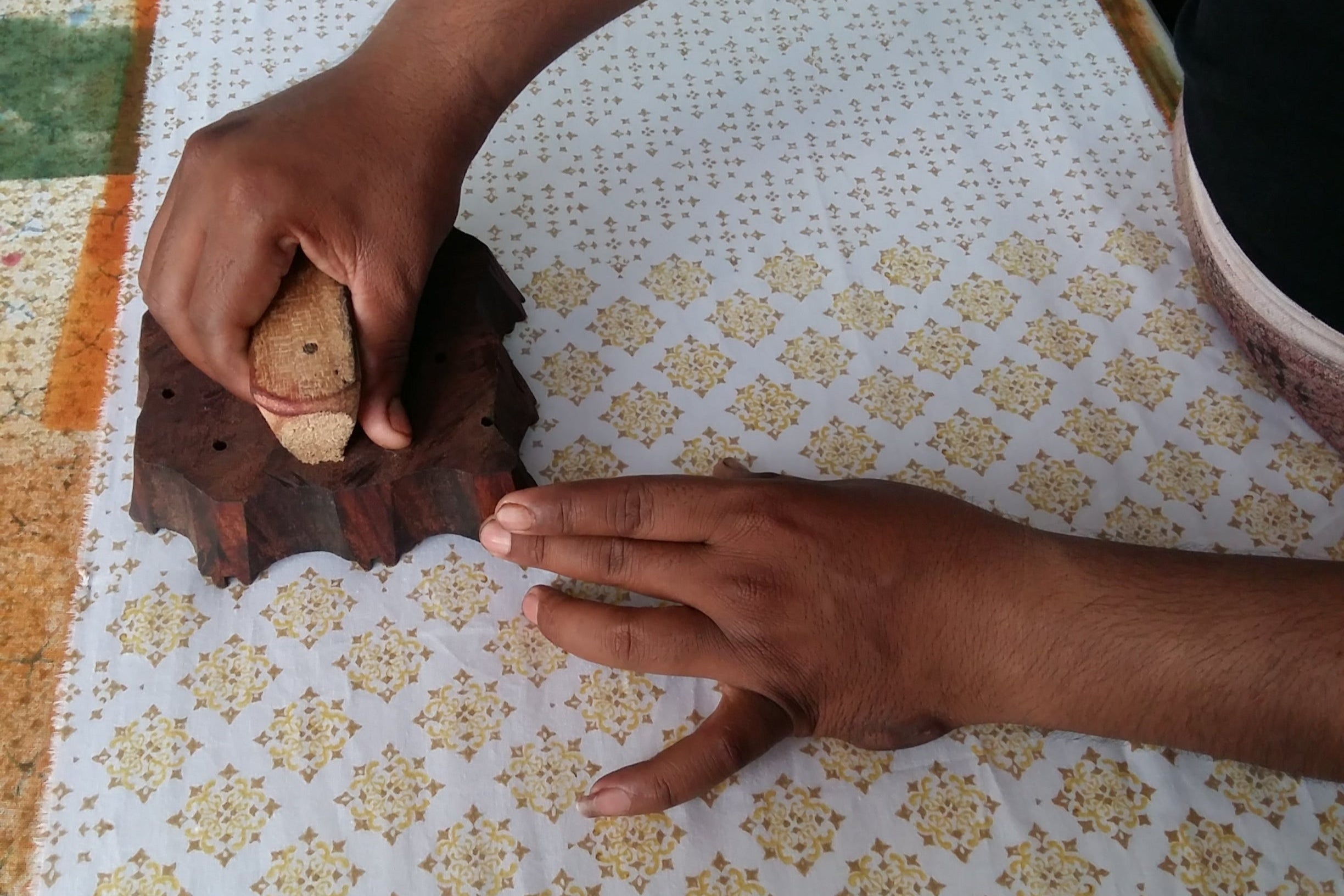
The wooden block is pressed firmly into a tray of dye, ensuring even coverage across the carved surface. The artisan then positions the block on the fabric with practised precision — aligning it to guide marks along the table — and strikes the back of the block with a firm, even mallet blow.
The block is lifted cleanly, repositioned along the repeat, and the process begins again. Metre by metre, stamp by stamp. For multi-colour designs, the first colour is applied across the full length of fabric and allowed to dry before the second block is introduced.
This rhythm — dip, position, press, lift, move — continues for hours. It demands consistency of pressure, accuracy of placement, and a kind of meditative focus that cannot be rushed. It is, in many ways, a physical expression of the slow living philosophy we write about frequently in this journal.
Step 5: Drying and Finishing
The printed fabric is hung in open air to dry — traditionally in sunlight, which also helps fix certain natural dyes. Once dry, the cloth is washed to remove excess dye and surface residue, then steamed or ironed to set the colours and soften the hand of the fabric.
The result carries the subtle irregularities of handwork — slight variations in pressure, tiny shifts in alignment, tonal differences between blocks. These are not flaws. They are the signature of the human hand. No two pieces are identical.
Natural Dyes: The Colour of the Earth
Traditional block printing in Jaipur uses dyes derived entirely from natural sources:
- Indigo — from the indigo plant, producing the full spectrum from pale sky to deep navy
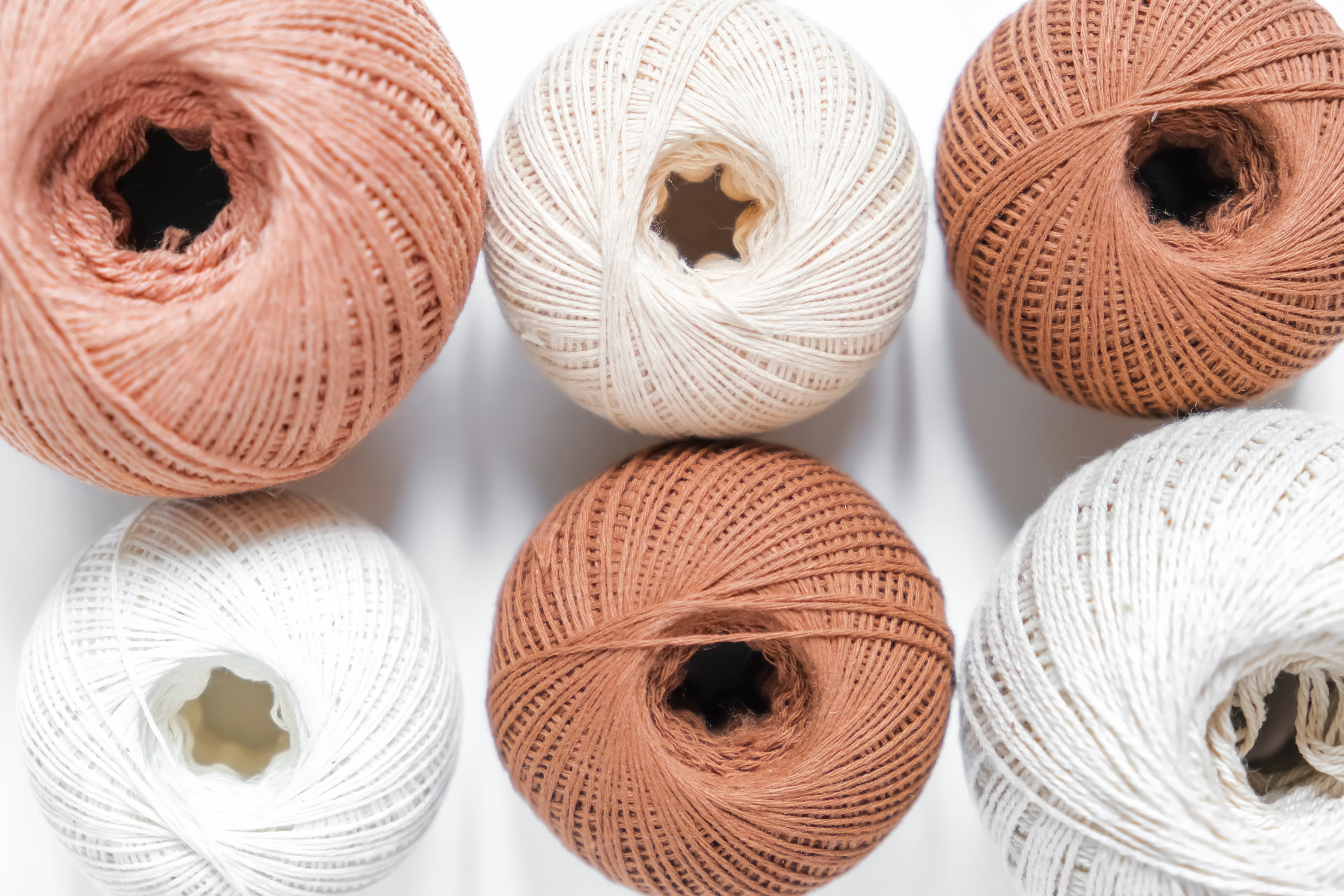
- Madder root — yielding warm reds, terracottas, and dusty pinks
- Turmeric — for golden yellows and warm ochres
- Pomegranate rind — producing olive greens and warm tans
- Iron and alum — used as mordants to shift and fix colours, creating the full range of earthy tones, Jaipur printing is known for
These dyes are biodegradable, non-toxic, and safe for both artisan and end user. They age beautifully — softening and mellowing over time rather than fading harshly as synthetic dyes do. This is the same quality we look for in our own materials — things that improve with use rather than deteriorate. You can read more about why that matters in our piece on minimalism in home textiles.
Why This Process Matters
Hand block printing is slow by design. A skilled artisan might print four to six metres of fabric in a day. A single bed linen set can take several days from the first block to finished cloth.
This slowness is not inefficiency — it is integrity. Every piece has been handled, considered, and made with direct human attention at every stage. The knowledge that produces it lives in people, not machines — and keeping the craft alive keeps communities alive alongside it.
This is the same principle behind our own Honest Standard — the belief that how something is made is inseparable from its value. Fair Trade certification, organic cotton, traceable supply chains — these are not marketing claims. They are the same commitment to process that Jaipur's artisans have held for three centuries.
To understand the fuller story of why this city shapes everything we do, read our piece on the art of stillness and Jaipur's textile heritage.
At Texaura
Our collections do not currently use hand block printing. But we are rooted in Jaipur, shaped by its craft traditions, and committed to the same values that define them — natural materials, ethical production, and objects made to last.
Every organic cotton piece we make carries that spirit — not in its print, but in its purpose.
Explore the Texaura collection — home textiles made in the spirit of Jaipur's craft heritage.

Written by Manuj Terapanthi